INDUSTRIAL AUTOMATION & CONTROL SYSTEMS (IACS)
Industrial Automation & Control Systems (IACS) is a broad term encompassing all technologies used to control and automate industrial processes. This includes industrial control panels such as PLCs, HMIs, SCADA systems, and DCS (Distributed Control Systems). IACS are commonly used in many industries, such as manufacturing, oil and gas, and power generation. They are designed to improve the efficiency, safety, and reliability of industrial processes by automating repetitive tasks and monitoring the status of equipment in real time. They can also gather and process data, enabling more informed decision-making and improved process optimization.
PROGRAMMABLE LOGIC CONTROLLER (PLC)
PLCs are industrial control panels that use programmable software to control and automate industrial processes. They can be programmed to perform various tasks, such as monitoring inputs and outputs, controlling actuators, and communicating with other devices. PLCs are widely used in manufacturing, food and beverage, and water treatment plants. They are particularly useful in applications that require precise control and automation, such as assembly line production, conveyor systems, and packaging machines.
RELAY-BASED CONTROL PANELS
Relay-based control panels use electromechanical relays to control and automate industrial processes. These relays are wired together to form a control circuit, which can be used to control motors, valves, and other equipment. The control circuit can also include other electrical components, such as contactors, timers, and fuses. An electrical signal activates the relays, which, in turn, activate or deactivate the electric circuit they control. Relay-based control panels are simple, cost-effective, and robust, making them popular for industrial applications. They are commonly used in applications that require simple, on/off control, such as lighting systems, HVAC systems, and pumps. They are also widely used in the mining, oil and gas, and construction industries, where harsh environments exist. Relay-based control panels are easy to install, maintain, and troubleshoot, making them a reliable option for many industrial applications.
SUPERVISORY CONTROL AND DATA ACQUISITION (SCADA)
SCADA systems are industrial control panels that monitor and control industrial processes over a wide area. They are typically used to monitor and control large-scale industrial processes, such as power generation and distribution, water treatment, and transportation systems. SCADA systems are commonly used in the utility, manufacturing, and transportation industries. They are particularly useful in applications that require remote monitoring and control, such as pipelines, electrical substations, and large-scale manufacturing plants.
HUMAN-MACHINE INTERFACE (HMI)
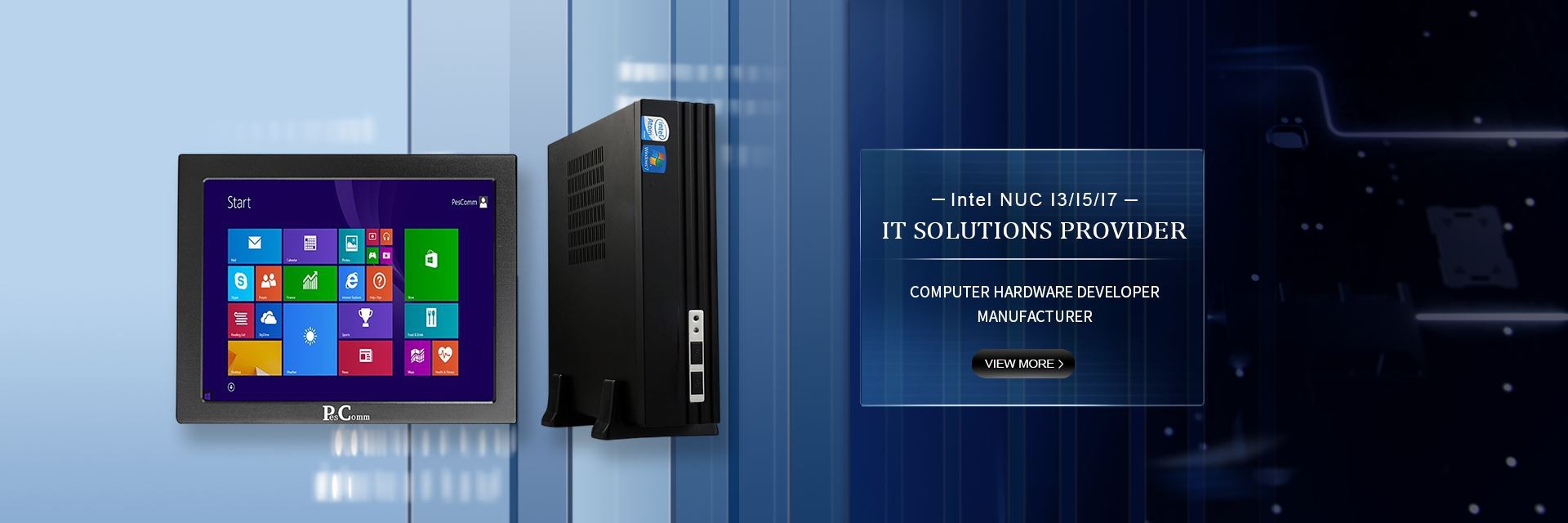
The Human-Machine Interface (HMI) is an industrial control panel that allows operators to interact with industrial equipment and machinery. These interfaces typically include a display screen and input devices such as buttons, touchscreens, and keyboards, which enable operators to monitor and control the equipment. HMIs are commonly used in various industries, such as manufacturing, food and beverage, and water treatment plants. They are particularly useful in applications that require real-time monitoring and control, such as process control, machine control, and automation. They also provide operators with an easy-to-use interface that allows them to interact with the equipment and see the status of the process in real time.
DISTRIBUTED CONTROL SYSTEMS (DCS)
A Distributed Control System (DCS) is an industrial control system that uses a distributed architecture to control and automate industrial processes. This architecture uses multiple controllers connected over a communication network, allowing for a decentralized control system. DCSs are commonly used in large-scale industrial applications such as chemical plants, oil refineries, and power plants. They are designed to handle complex control and automation tasks, such as coordinating multiple process units' operations, monitoring equipment status in real time, and optimizing process performance. DCSs also allow for the integration of different control systems and communication protocols, enabling different systems to work together and share data.
PROGRAMMABLE AUTOMATION CONTROLLERS (PAC)
Programmable Automation Controllers (PACs) are a type of industrial control system that combines the functionality of a PLC and a PC into a single unit. This integration allows for more advanced control and automation tasks and the ability to run complex software applications. PACs are commonly used in industries such as manufacturing, food and beverage, and water treatment plants. They are particularly useful in applications that require advanced control and automation, such as process control, machine control, and automation. They also provide more computing power and memory than traditional PLCs, allowing for more advanced control algorithms, data logging, and communication protocols.
INDUSTRIAL PC (IPC)
An Industrial PC (IPC) is a computer specifically designed for use in industrial environments. It is ruggedized to withstand harsh conditions such as extreme temperatures, vibrations, and dust. IPCs are commonly used in numerous industries, such as manufacturing, oil and gas, and power generation. They are used to run industrial automation software, such as SCADA systems and PACs, as well as for data logging and analysis. IPCs are also used for communication and networking, enabling the integration of different systems and protocols. They can be used as a standalone system or as part of a larger control system, such as a DCS or an IACS.
MOTOR CONTROL CENTERS (MCC)
Motor Control Centers (MCCs) are industrial control panels designed to control and protect electric motors. They typically include a combination of motor starters, circuit breakers, and other electrical components used to control and protect the motors. MCCs are commonly used in many industries, such as manufacturing, oil and gas, and power generation. They control and protect motors in applications such as conveyors, pumps, and fans. MCCs are designed to be compact and easy to install, and they can be used as a standalone system or as part of a larger control system, such as a DCS or an IACS. They also include protection against over-current, short-circuit, and ground faults, ensuring the safety and reliability of the motors.